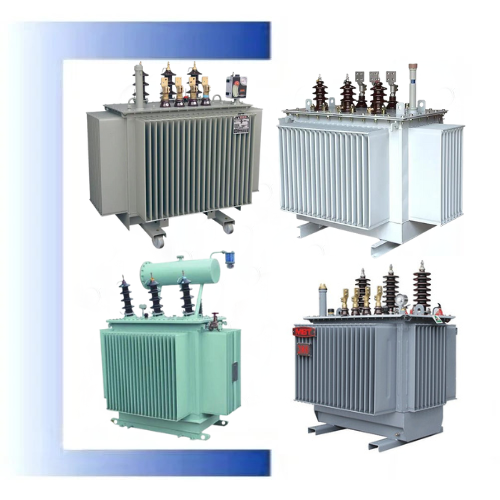
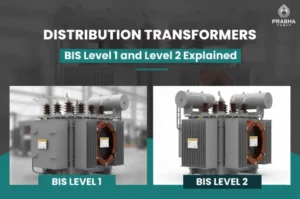
Distribution transformers are vital components of electrical power distribution systems. It steps down high-voltage electricity to lower, usable voltages for residential, commercial, and industrial consumption. In India, to ensure quality, energy efficiency, and performance standards, distribution transformers are classified by the Bureau of Indian Standards (BIS) into energy efficiency Levels 1 and 2 under Amendment 4 of IS 1180 (Part 1): 2014.
This article explores what BIS Level 1 and Level 2 mean for distribution transformers, the associated standards, testing criteria, and the evolution of BIS amendments affecting these products.
Understanding BIS Levels in Distribution Transformers
BIS has set different energy efficiency levels for distribution transformers:
-
Level 1 defines a comparatively lower energy efficiency benchmark but still meets mandatory quality and performance standards.
-
Level 2 corresponds to higher energy efficiency, effectively making transformers more efficient and environmentally friendly.
These levels are similar to regulatory norms in other industries — for example, vehicle emission standards like Bharat Stage Level 1 and Level 2 — highlighting progressive improvements over time. They cover transformers with ratings between 5 KVA up to 2500 KVA, across various voltage classes, including 11 kV and 33 kV systems.
Key BIS Standards and Amendments Relevant to Distribution Transformers
The primary standard governing distribution transformers in India is IS 1180 (Part 1): 2014, which outlines technical specifications including design, construction, testing, and performance requirements. Over time, this standard has undergone multiple amendments to tighten energy efficiency and quality norms:
-
Amendment 1 introduced initial efficiency levels and testing methods.
-
Amendments 2 and 3 incrementally raised efficiency requirements.
-
Amendment 4 (current) defines the present Level 1 and Level 2 energy efficiency specifications, requiring manufacturers to comply with stringent loss limits.
These amendments reflect India’s commitment to reducing transmission losses, improving power supply reliability, and aligning with global energy conservation goals.
Technical Specifications for Level 1 and Level 2 Distribution Transformers
Transformer manufacturers must follow strict technical criteria defined under IS 1180 and BIS certification processes.
Key specifications include performance criteria like temperature rise, efficiency, regulation, and insulation levels, with Level 2 meeting higher standards and generally being a mandatory procurement requirement for certain ratings.

Level 1 and Level 2 distribution transformers refer to energy efficiency standards, where Level 2 transformers have significantly lower losses and are more efficient than Level 1 transformers.
Some important parameters include core loss and load loss limits, which directly reflect energy efficiency.

For example, typical permissible losses for transformers in the 16 kVA to 500 kVA range might be:
Transformer losses as per IS 1180 (Latest Amendment)
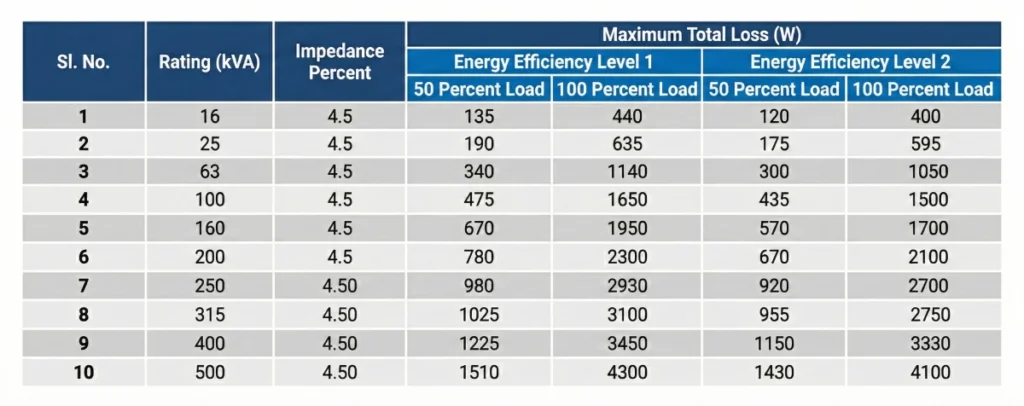
As shown, Level 2 transformers have stricter loss limits, enabling greater energy efficiency. Testing involves rigorous evaluation of these parameters, and compliance leads to BIS certification with an energy efficiency level mark displayed on the product.
Benefits of BIS Level 2 Transformers Over Level 1
-
Lower Energy Consumption: Level 2 transformers have reduced core and load losses compared to Level 1, saving more electricity over the transformer’s lifetime.
-
Environmentally Friendly: By reducing energy waste, Level 2 transformers lower greenhouse gas emissions, contributing to a greener environment.
-
Improved Performance: Enhanced cooling and advanced design features in Level 2 transformers result in longer service life and higher reliability.
-
Compliance with Modern Regulations: Level 2 transformers meet stricter efficiency standards, ensuring readiness for future grid requirements and evolving energy efficiency mandates.
Impact of BIS Amendments on Transformer Manufacturing
Amendments require manufacturers to continuously innovate and improve design processes, material quality, and manufacturing techniques. This drives higher standards in the Indian electrical industry and supports government energy-saving initiatives like the Perform, Achieve and Trade (PAT) scheme.
Manufacturers must obtain updated BIS licenses reflecting compliance with the latest amendment to participate in tenders and government procurements.
Conclusion
As energy efficiency and performance standards evolve, adhering to BIS Level 1 and Level 2 specifications has become crucial for the quality and reliability of distribution transformers. These standards not only ensure reduced energy losses but also contribute significantly to sustainable power distribution systems across India.
In this context, Prabha Power, based in Guwahati, stands out as a reputable manufacturer of distribution transformers. Committed to delivering high-quality, BIS-certified and APDCL-approved transformers, engineered for superior performance that meet the latest efficiency amendments, Prabha Power supports the demands of modern electrical infrastructure with robust and reliable products. For more details, call us today!
Important notes
Standardization: Transformers must comply with standards like IS 1180 and be certified by the Bureau of Indian Standards (BIS).
Mandatory Requirement: Since January 1, 2017, Level 1 efficiency has been removed, and Level 2 and 3 have been renamed Star-1 and Star-2. Level 2 (Star-1) is now the minimum mandatory standard for procurement for many ratings.